
A Step-by-Step Protocol to Break the Algorithm Loop & Reclaim Your Brain
Why This Reset Matters
If you find yourself mindlessly swiping through feeds, opening apps by pure reflex, or struggling to read a single page of a book without reaching for your phone—it is not a personal failure.
Your brain is simply responding to modern digital design. Tech platforms use a psychological mechanism called variable reinforcement—the exact framework behind slot machines—to keep your dopamine levels high and your focus fragmented.
You cannot beat a multi-billion-dollar algorithm with raw willpower. You beat it with systems and friction. This 7-day protocol isn’t about abandoning technology; it is about building a buffer so you can choose when, how, and why you look at a screen.
1.The Visual Kill-Switch:Day 1: Environmental Friction.
The Goal: Strip the neurological rewards away from your screen.
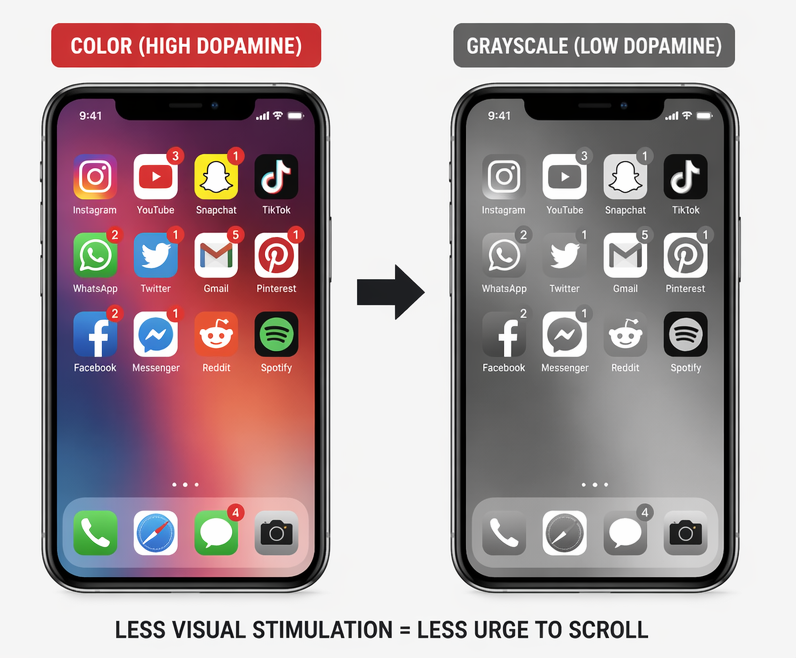
- The Action: Go into your smartphone’s accessibility settings and change your display to Grayscale (black and white).
- The Science: Brightly colored, high-saturation icons and red notification badges trigger an immediate dopamine micro-hit. When everything is flat grey, your brain loses visual interest almost instantly.
2. Bury the Doorways: Day 2: Out of Sight, Out of Mind.
The Goal: Break the automatic thumb movements that pull you into loops
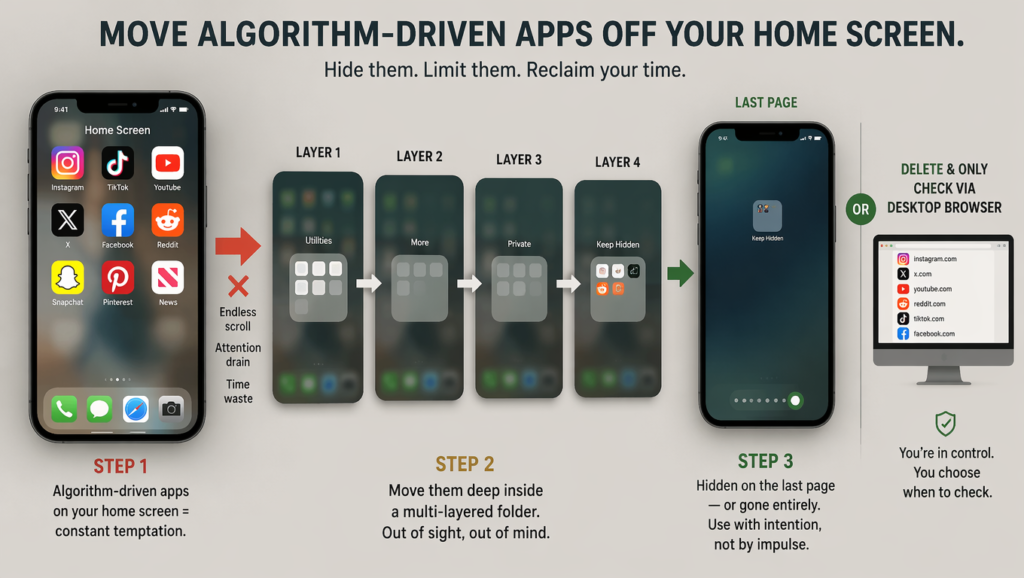
- The Action: Move every algorithm-driven app (social media, endless-scroll news, short-form video) off your home screen. Hide them deep inside a multi-layered folder on your very last page, or delete them entirely and resolve to only check them via a desktop browser.
- The Science: Humans rely heavily on spatial memory. If the app icon isn’t where your thumb expects it to be, you break the unconscious reflex loop and gain a critical 3-second window of conscious awareness.
3.Defend the Transitions:Day 3: Reclaiming the Margins.
The Goal: Stop using micro-boredom as an excuse to consume.
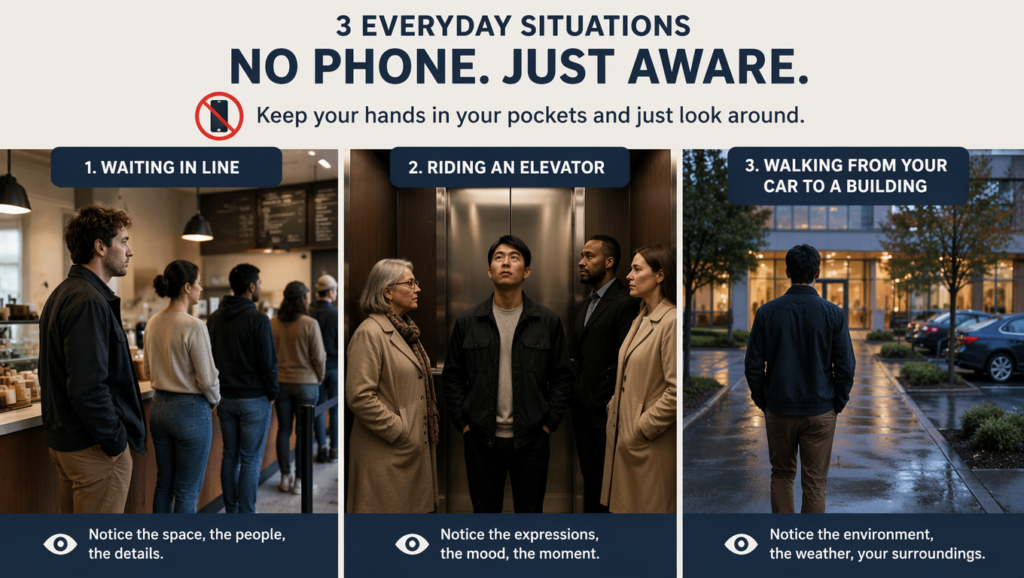
- The Action: Pick three everyday situations where you are forbidden from touching your phone: waiting in line, riding an elevator, or walking from your car to a building. Keep your hands in your pockets and just look around.
- The Science: Constant stimulation atrophies our capacity for default-mode network processing (the brain state responsible for creative problem-solving and deep reflection).
The Goal: Protect your sleep architecture and cognitive recovery.
4.The Evening Blackout:Day 4: Restricting the Input.
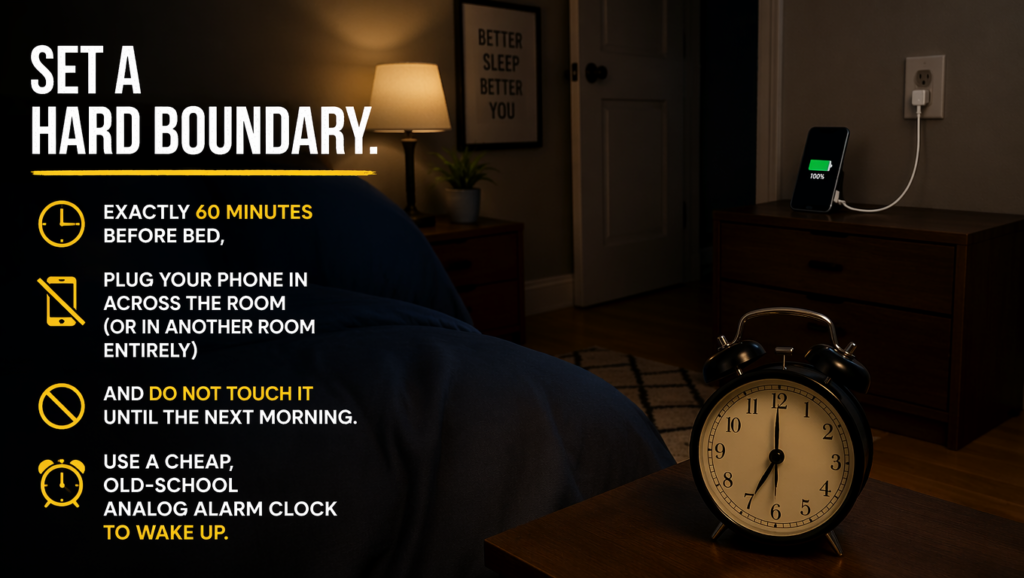
- The Action: Set a hard boundary. Exactly 60 minutes before bed, plug your phone in across the room (or in another room entirely) and do not touch it until the next morning. Use a cheap, old-school analog alarm clock to wake up.
- The Science: Blue light suppresses melatonin production, but the mental stimulation of algorithmic feeds right before sleep prevents your brain from slipping smoothly into deep, restorative slow-wave sleep cycles.
5.The Monotasking Sprint:
Day 5: Rebuilding Focus.
The Goal: Train your prefrontal cortex to tolerate sustained focus again.
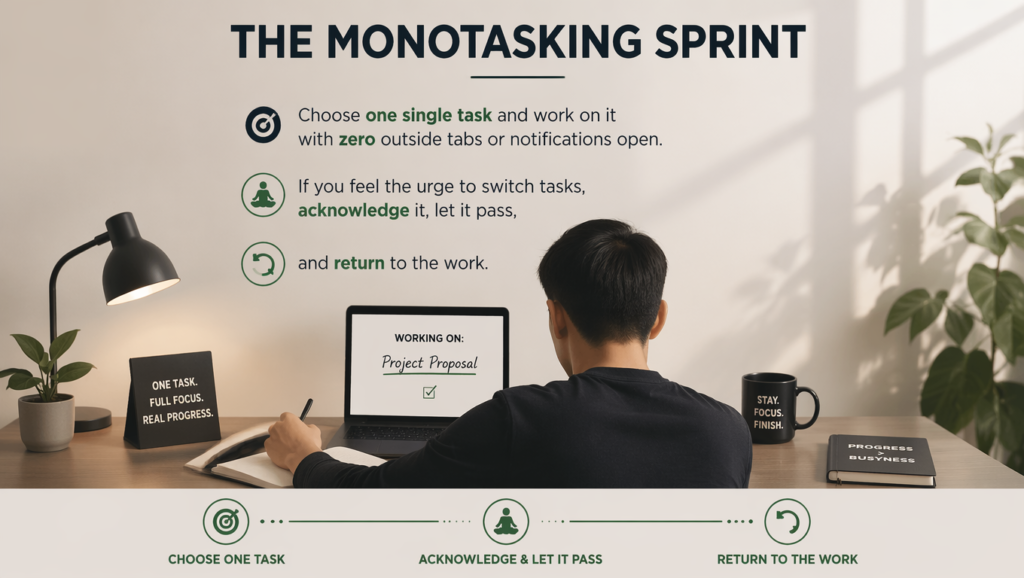
- The Action: Set a timer for 25 minutes. Choose one single task (writing, reading, planning, or debugging) and work on it with zero outside tabs or notifications open. If you feel the urge to switch tasks, acknowledge it, let it pass, and return to the work.
- The Science: “Task switching” induces a heavy cognitive drain called “attention residue.” Monotasking rebuilds your attention span’s stamina.
6.The 24-Hour Digital Fast:Day 6: Deep Cleansing.
The Goal: Complete baseline reset of your reward system.
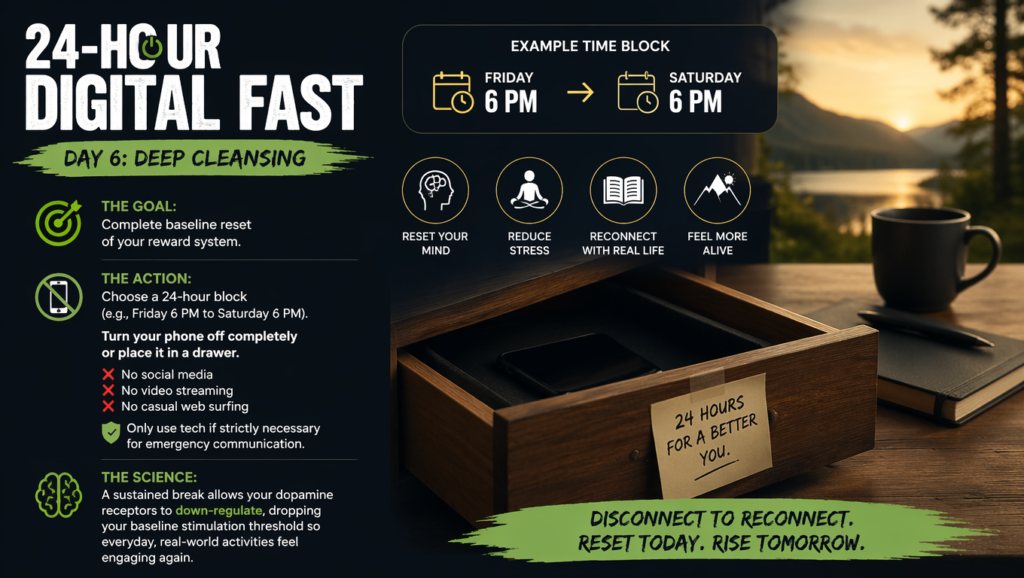
- The Action: Choose a 24-hour block (e.g., Friday 6 PM to Saturday 6 PM). Turn your phone off completely or place it in a drawer. No social media, no video streaming, no casual web surfing. Only use tech if strictly necessary for emergency communication.
- The Science: A sustained break allows your dopamine receptors to down-regulate, dropping your baseline stimulation threshold so everyday, real-world activities feel engaging again.
7.Intentional Architecture:Day 7: The New Protocol.
The Goal: Design sustainable, long-term rules for the future.
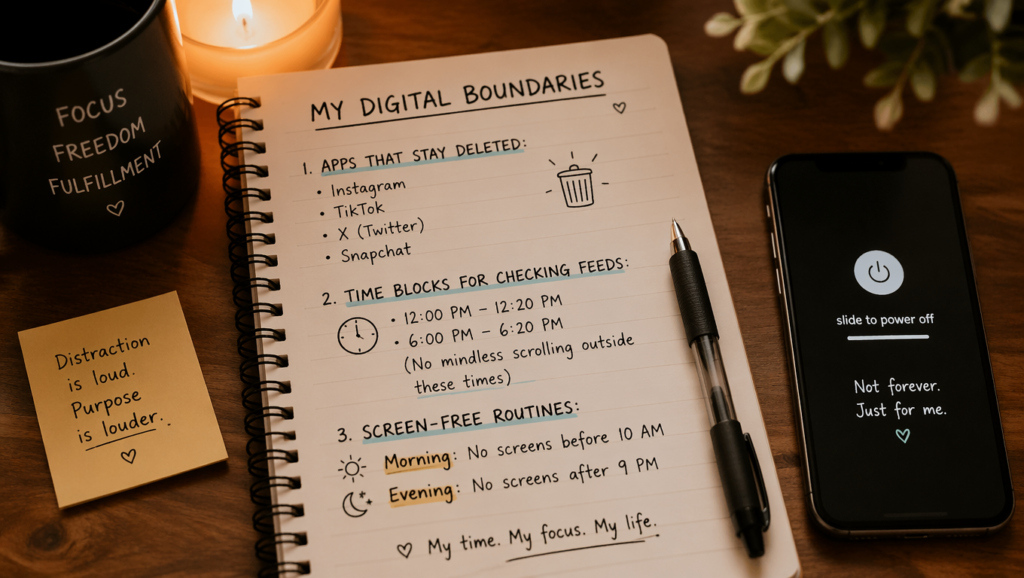
- The Action: Before you turn your phone back on, write down your new digital boundaries. Decide which apps stay deleted, set strict time blocks for checking feeds, and commit to keeping your morning and evening routines screen-free.
- The Science: You cannot permanently live offline, but you can change your role from a passive product of the attention economy to an intentional user of tools.